
How to Store Camping Gear in a Garage (UK Storage Guide)
Tents, sleeping bags, stoves, chairs, and cool boxes. Camping gear is bulky, awkward, and used only a handful of times a year, which makes the garage its natural home. The trouble is it ends up in a heap that you dig through every trip. A little organisation fixes that for good. Here is how to store camping gear in a garage so it is tidy, protected, and ready to grab.
Key Takeaways
- Store camping gear up high, since you only need it now and then.
- Keep it in labelled, sealed boxes to protect it from damp and dust.
- Hang bulky items like chairs and mats on wall hooks.
- Group everything in one zone so a trip is quick to pack.
Why Camping Gear Needs a System
Camping kit is the definition of occasional storage. It sits untouched for months, then all needs to come out at once for a trip.
Left in a pile, it gets damp, squashed, and hard to find, and packing for a weekend away becomes a chore.
A simple system keeps it protected and together, so you can load the car in minutes rather than hunting through the garage.
Use the High and Overhead Space
Because you rarely need it, camping gear is perfect for the highest storage in the garage. That frees your accessible shelves for everyday things.
Overhead and ceiling storage is ideal here. A motorised storage platform lifts bulky, seasonal kit up out of the way and lowers it at the push of a button when a trip comes around.
Our guide to overhead garage storage covers using that space safely.
Sealed Boxes Keep It Protected
A garage gets damp and dusty, which is bad news for sleeping bags and canvas. Sealed, sturdy boxes are the answer.
Use clear or labelled boxes so you can see or read what is inside without opening every one. Group by type, one for cooking, one for sleeping, one for shelter.
Keep sleeping bags and clothing in airtight boxes to guard against damp and any garage smells.
Hang the Bulky Awkward Bits
Not everything boxes up neatly. Folding chairs, roll mats, and windbreaks are easier hung on the wall.
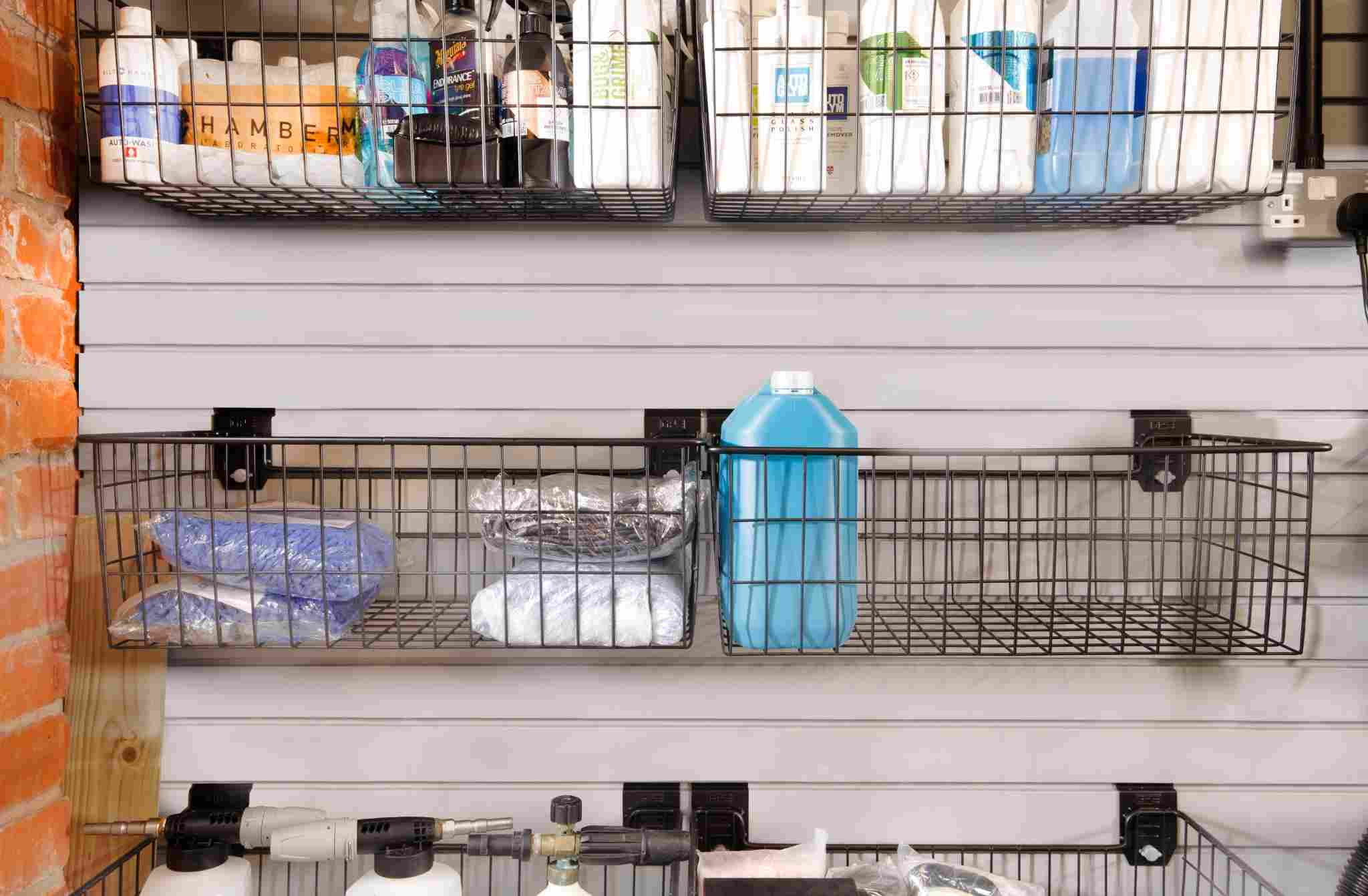
A slatwall panel with hooks holds these awkward items off the floor and keeps them together.
Hanging them also lets air circulate, which helps anything that went away slightly damp dry out properly.
Look After the Tent
The tent is usually the biggest and most valuable item, so it deserves care. Never store it away wet, as it will mildew and rot.
Dry it fully after a trip, then keep it in its bag inside a sealed box, up off a cold floor.
Storing it high and dry, away from the damp slab, is the single best thing you can do to make it last.
Create a Camping Zone
The real trick is keeping all of it in one place. Scatter it around the garage and packing becomes a treasure hunt.
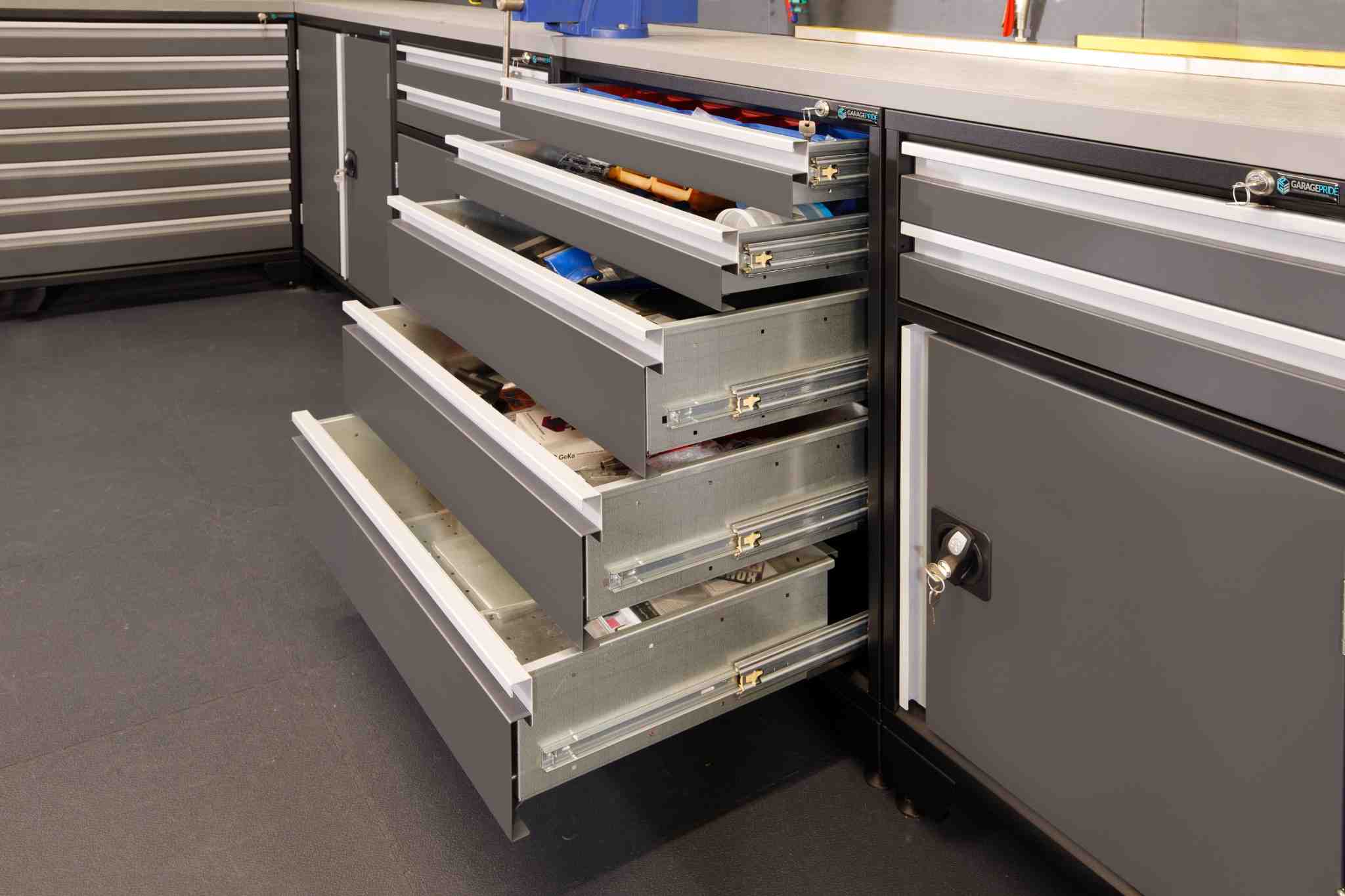
Dedicate one area, a run of shelving plus the space above it, to camping. Boxes on the shelf, bulky items on hooks, tent up top.
Our garage organisation guide explains how to zone the whole space this way.
Keep Pests Out
A quiet garage is inviting to mice and insects, and they love nesting in sleeping bags and soft kit. Sealed hard plastic boxes are your best defence.
Avoid leaving food or sweet-smelling items in with the gear, as these draw pests in. Even an old cereal bar in a rucksack can be enough.
Storing everything sealed and up off the floor keeps the nesting spots out of reach.
What Not to Store With Camping Gear
Keep fuel and gas canisters separate from the rest of the kit. Store them upright, in a ventilated spot, never sealed in a warm box.
Batteries are best removed from torches and lanterns between trips so they cannot leak and ruin the device.
Keeping the consumables apart from the soft kit protects both and keeps everything safe.
Get It Trip-Ready
Store the gear the way you pack it and every trip gets easier. Keep a simple checklist taped inside a cupboard or on the wall.
Keep consumables, gas canisters, and batteries together and check them before you go rather than at the campsite.
With everything boxed, labelled, and in one zone, loading the car for a weekend away takes minutes.
Cool Boxes, Stoves and Awkward Extras
A few items never fit the box-and-hook system neatly. Cool boxes are bulky but hollow, so use the space inside them to store smaller items and save room.
Stoves and cookware are best kept together in one sturdy box, wiped clean so grease does not attract pests over the winter.
Fold-flat items like tables and windbreaks slide neatly down the side of a shelving unit or behind a cabinet.
FAQ: Storing Camping Gear in a Garage
- How should I store camping gear in a garage? In sealed, labelled boxes grouped by type, kept up high or in overhead storage since it is only used occasionally. Hang bulky items like chairs on wall hooks.
- How do I stop camping gear getting damp in the garage? Use airtight boxes, keep everything off the cold floor, and never pack a tent or sleeping bag away wet. Storing high, away from the slab, helps too.
- Where should I keep a tent in the garage? Dried fully, in its bag inside a sealed box, stored high and off the floor. Damp is what rots a tent, so keep it dry and away from the concrete.
- What is the best way to organise camping kit? Keep it all in one zone with boxes on shelving, bulky items on hooks, and the tent up top. A checklist makes packing quick.
Conclusion
Camping gear is bulky and seasonal, which makes it a perfect fit for the high and overhead space in a garage. Box it, label it, hang the awkward bits, and keep it all in one zone.
Do that and every trip starts with a quick, stress-free pack rather than a dig through the clutter.
Browse our overhead and wall storage range to get your camping kit organised.
Related GaragePride Guides
Share Story


