
Garage Lighting: How Much Light Your Garage Actually Needs
You walk into the garage, flick the switch, and a single dim bulb does its best to light a space the size of a small room. Sound familiar? Most UK garages are badly lit, which makes everything harder to find and any real work a strain on the eyes. Good lighting is one of the cheapest upgrades you can make, and it changes how the whole space feels. Here is how to get it right.
Key Takeaways
- Aim for around 50 lumens per square foot for general use, double that for a work area.
- Choose cool white light between 4,000K and 5,000K for a clean, daylight feel.
- Spread several LED fittings across the ceiling rather than relying on one bulb.
- Add task lighting over the workbench and use IP rated fittings if the garage gets damp.
Why Garage Lighting Matters More Than You Think
A garage is usually the worst lit room in the house. One central bulb throws shadows everywhere and leaves the corners dark.
Good lighting makes the space safer, easier to work in, and far more usable. You can find things quickly, work without straining, and the garage instantly feels bigger.
It also makes the space more inviting, which matters if you are using it as a gym, workshop, or hobby room rather than just storage. A dingy garage gets avoided, while a bright one gets used.
How Bright Should a Garage Be?
Brightness is measured in lumens, not watts. Watts only tell you how much power a bulb draws, while lumens tell you how much light you actually get.
For a general purpose garage, aim for around 50 lumens per square foot. For detailed work like a workbench, double that to roughly 100 lumens per square foot.
As a rough guide for a standard UK single garage of around 150 square feet:
- General lighting: 7,500 to 9,000 lumens total
- Workshop or detailed tasks: 12,000 lumens or more
- Storage only: 6,000 lumens is enough
Spread the light across several fittings rather than relying on one bright source in the middle. Even coverage matters more than raw power.
Choosing the Right Colour Temperature
Colour temperature is measured in Kelvin and it changes how the light feels. For a garage, cooler light works best.
Aim for 4,000K to 5,000K. This is a clean, bright white that is closest to daylight. It keeps you alert and shows colours and detail accurately, which matters for any kind of work.
Avoid warm yellow bulbs below 3,000K. They are fine for a living room but make a garage feel dim and muddy. Going much above 5,000K starts to feel cold and clinical, so the mid range is the sweet spot.
LED vs Fluorescent: Why LED Wins
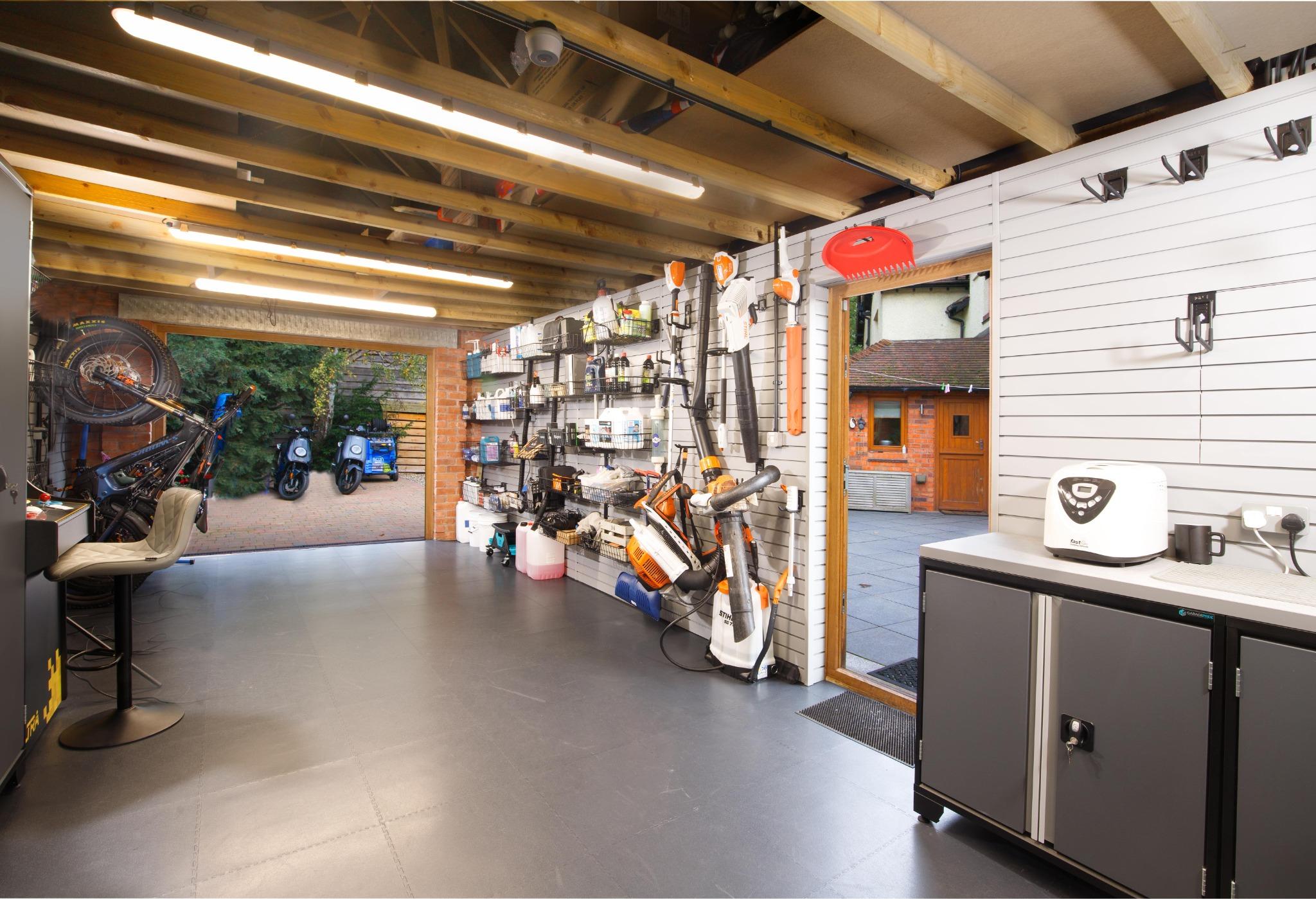
For years the default garage light was a fluorescent tube. They were cheap, but they flicker, hum, and struggle to start in the cold, which is exactly what a UK garage throws at them.
LED fittings have replaced them for good reason. They switch on instantly even at low temperatures, use far less power, and last for years without attention.
An LED also keeps its full brightness in the cold, while an old tube can take minutes to warm up on a January morning. Whatever style of fitting you choose, make sure it is LED.
Layer Your Lighting by Zone
The best lit garages do not rely on one type of light. They use layers.
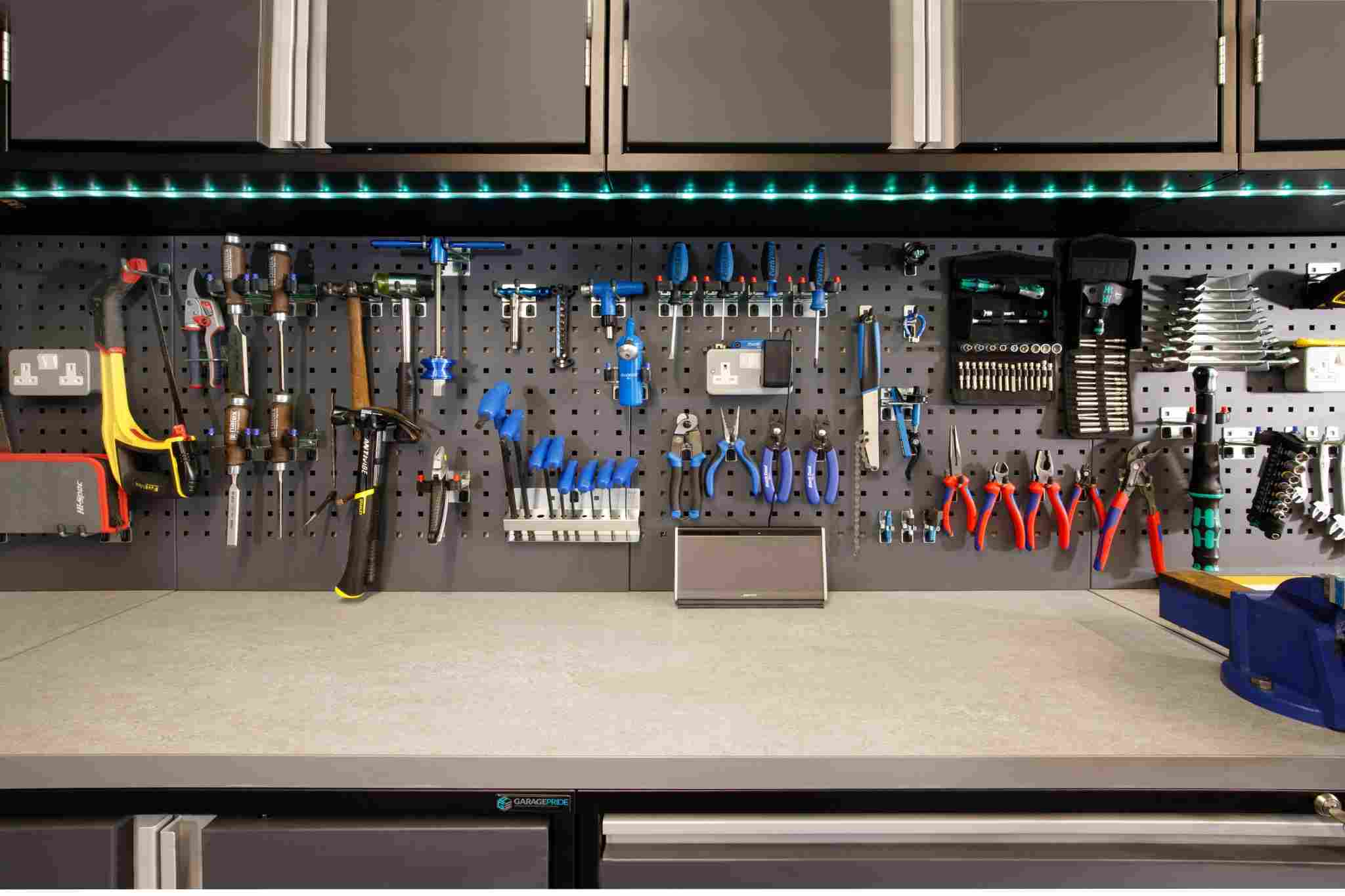
Start with general overhead lighting to cover the whole space evenly. Then add brighter task lighting over the areas where you actually do things, like the workbench or the car bay.
Position lights so they sit slightly in front of where you stand. That way the light falls on your work rather than your back casting a shadow over it.
Lighting for Different Garage Uses
How you light the garage depends on what you do in it. A storage only garage needs even general light so you can find things, and little else.
A workshop needs bright task lighting over the bench and good overall levels for safe use of tools. A garage gym benefits from bright, even light that keeps you motivated and lets you train safely.
If the garage doubles as more than one of these, light for the most demanding task. It is easy to switch off a zone you do not need, but impossible to add light that was never fitted. Our complete garage fit-out guide shows how lighting fits with flooring and storage.
Make the Most of Natural Light
If your garage has windows, keep them clear and clean. Natural light is free and makes the space feel more open during the day.
A light coloured wall finish helps too. White or pale grey walls bounce light around and make the same fittings feel brighter.
That said, do not rely on natural light alone. UK winters are dark by mid afternoon, so you still need good artificial lighting for most of the year.
Don't Forget Power and Switching
Think about how the lights are wired before you buy. Splitting the garage into two switched zones means you can light just the area you need.
Motion sensor lighting is handy near the door for when your hands are full. It comes on as you walk in and saves fumbling for a switch.
If you are planning a bigger upgrade, our garage lighting range covers fittings designed for the cold and damp of a UK garage. Any new wiring should be done by a qualified electrician.
Common Garage Lighting Mistakes
The most common mistake is too little light from a single source. One bulb in the centre will never light a garage properly.
Using warm yellow bulbs is another. They make the space feel smaller and hide detail when you are working.
Finally, people forget the corners. Storage and shelving along the walls needs light too, or you will always be squinting into the shadows to find things. Light the whole room, not just the middle.
FAQ: Garage Lighting
- How many lumens do I need for a garage? Around 50 lumens per square foot for general use. For a standard UK single garage that is roughly 7,500 to 9,000 lumens total, spread across several fittings.
- What colour light is best for a garage? A cool white between 4,000K and 5,000K. It is close to daylight, keeps you alert, and shows detail and colour accurately.
- Are LED lights worth it for a garage? Yes. LEDs are brighter, cheaper to run, last longer, and switch on instantly even in the cold, unlike old fluorescent tubes.
- Do garage lights need special fittings? Look for fittings rated for cold and damp conditions. A garage gets colder and more humid than the rest of the house.
- How many lights do I need in a single garage? Three or four good LED battens spread across the ceiling will light most single garages well. Add a task light over the workbench.
Conclusion
Good garage lighting is a small job with a big payoff. Get the brightness, colour, and layout right and the whole space becomes safer, more usable, and more pleasant to spend time in.
Start with bright, cool white LED fittings spread across the ceiling, then add task lighting where you work.
Browse our garage lighting range to find fittings built for UK garage conditions.
Related GaragePride Guides
Share Story


