
Rubber Garage Flooring UK: Is It Worth It vs Floor Tiles?
Search for garage flooring and rubber comes up fast, especially for gyms and workshops. It is tough, grippy, and kind on the joints, but is it actually the best choice for a UK garage? Not always. There is often a better option that does the same job with less hassle. Here is an honest look at rubber garage flooring and how it compares to interlocking tiles.
Key Takeaways
- Rubber flooring is grippy, cushioned, and hard-wearing.
- It suits gyms and heavy workshops, but rolls are heavy and awkward to fit.
- Interlocking tiles give similar comfort with far easier installation.
- For most garages, tiles are the more practical choice.
What Is Rubber Garage Flooring?
Rubber garage flooring usually comes as rolls, mats, or heavy tiles laid over the concrete. It is dense, hard-wearing, and has natural grip and cushioning.
It is popular in gyms because it absorbs impact and protects both the floor and dropped weights.
The trade-off is weight and fit. Rubber rolls are heavy, awkward to move, and often need gluing down, which makes them a bigger job than they first appear.
The Upsides of Rubber
Rubber does some things very well. It grips underfoot even when damp, cushions impact, and shrugs off heavy use.
For a dedicated home gym, that impact absorption protects your joints and the concrete when weights come down.
It is also quiet, dampening the clatter of a busy workshop or garage gym.
The Downsides in a Real Garage
The problems show up at fitting time. Rubber rolls are heavy and hard to handle, and cutting them cleanly is awkward.
Many need gluing to the concrete, which is messy and permanent, so lifting or moving them later is a real job.
Solid rubber also traps any water underneath, which can be a problem in a damp UK garage where the slab never fully dries.
The Easier Alternative: Interlocking Tiles
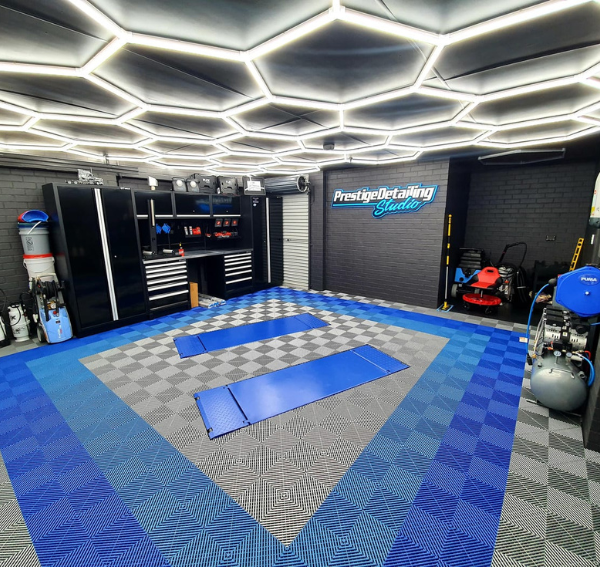
For most garages, interlocking tiles give you the best of rubber with none of the hassle. They click together loose over the concrete, with no glue and no mess.
Our anti-fatigue tiles deliver the cushioning and grip a gym or workshop needs, while vented tiles let water drain away underneath.
Because they lift and re-lay, you can move or expand the floor whenever you like.
Rubber vs Tiles: The Verdict
Here is the honest comparison for a UK garage:
- Comfort and grip: both good, tiles match rubber for standing and training
- Fitting: tiles win easily, click together with no glue
- Damp handling: vented tiles win, rubber can trap water
- Flexibility: tiles win, lift and re-lay any time
Rubber has its place in a hardcore gym, but tiles are the more practical all-rounder.
How to Decide Between Them
The choice comes down to a couple of honest questions. Is the floor permanent, or might the room change use? And does it get wet or stay dry?
If it is a fixed, heavy-use gym that stays dry, rubber is a fair option. If the space parks a car, doubles up, or ever needs lifting, tiles win comfortably.
For a damp garage, vented tiles beat rubber outright, since they drain rather than trapping water underneath.
Best Flooring for a Garage Gym
If a garage gym is your main use, you want cushioning and grip where you lift and stand.
Anti-fatigue tiles give that comfort while protecting the concrete from dropped weights, and they lay in an afternoon with no glue.
Our guide to building a garage gym covers flooring, layout, and storage together.
Where Rubber Still Makes Sense
To be fair to rubber, there are cases where it is the right call. A dedicated, permanent gym where heavy weights are dropped daily is the strongest one.
In that setting the extra thickness and dead weight are an advantage, absorbing impact and staying put. If the floor never needs to move and impact is constant, rubber earns its place.
For everything else, a garage that parks a car, doubles as a workshop, or changes use over time, interlocking tiles are the more flexible fit.
What About Cost?
On paper, basic rubber matting can look cheap by the roll. But the real cost includes glue, delivery of heavy rolls, and often a fitter for a clean finish.
Interlocking tiles are priced clearly by the square metre or in garage bundles, with no glue and no fitter needed since you lay them yourself.
Once fitting and hassle are counted, tiles are usually the better value for a normal garage, and they lift and re-lay if you move.
Fitting and Looking After Your Floor
Interlocking tiles need only a clean, dry concrete base. Lay them from one corner, click them together, and finish the open edges with ramps.
Cleaning is easy, a sweep and an occasional mop, with no sealing or resealing.
For the full range and how the tiles compare, see our floor tile range guide.
FAQ: Rubber Garage Flooring
- Is rubber flooring good for a garage? It is grippy, cushioned, and tough, which suits gyms and heavy workshops. But rubber rolls are heavy, awkward to fit, and can trap water, so interlocking tiles are more practical for most garages.
- Is rubber or tile flooring better for a garage gym? Both give comfort and grip. Anti-fatigue interlocking tiles match rubber for cushioning but lay in an afternoon with no glue and lift again if needed.
- Does rubber flooring trap moisture? Solid rubber glued to concrete can trap water underneath, a problem in a damp UK garage. Vented tiles let water drain away instead.
- Can I lay garage flooring myself? Interlocking tiles yes, they click together over clean concrete with no glue. Rubber rolls are heavier and often need gluing, so they are a bigger job.
Conclusion
Rubber flooring is tough and comfortable, but in a real UK garage it is heavy to fit and can trap damp. Interlocking tiles give you the same grip and cushioning with none of the hassle, and they lift and re-lay whenever you need.
For most garages, tiles are the smarter choice.
Browse our garage floor tile range to find the right surface for your space.
Related GaragePride Guides
Share Story


