
Garage Conversion UK: Costs, Planning, Ideas & How to Start
That garage full of clutter could be a home office, a gym, a workshop, or a proper room that adds real value to your house. A garage conversion is one of the best-value ways to gain living or working space without extending. But there is a right way to plan it. Here is a practical UK guide to converting your garage, from the first decision to the finishing touches.
Key Takeaways
- Decide the room's purpose first, it drives every other choice.
- Sort the floor, walls, insulation, light, and power in the right order.
- Most internal conversions do not need planning permission, but check.
- Good flooring and storage are what make the room actually usable.
Why Convert a Garage?
A garage conversion turns wasted space into something you use every day. It is far cheaper than an extension because the structure, roof, and floor already exist.
Done well, it adds usable space and can add value to your home. A home office, gym, or hobby room is a genuine selling point.
The key is doing it properly so the room is warm, dry, and practical, not just a tidied-up garage.
Start With the Purpose
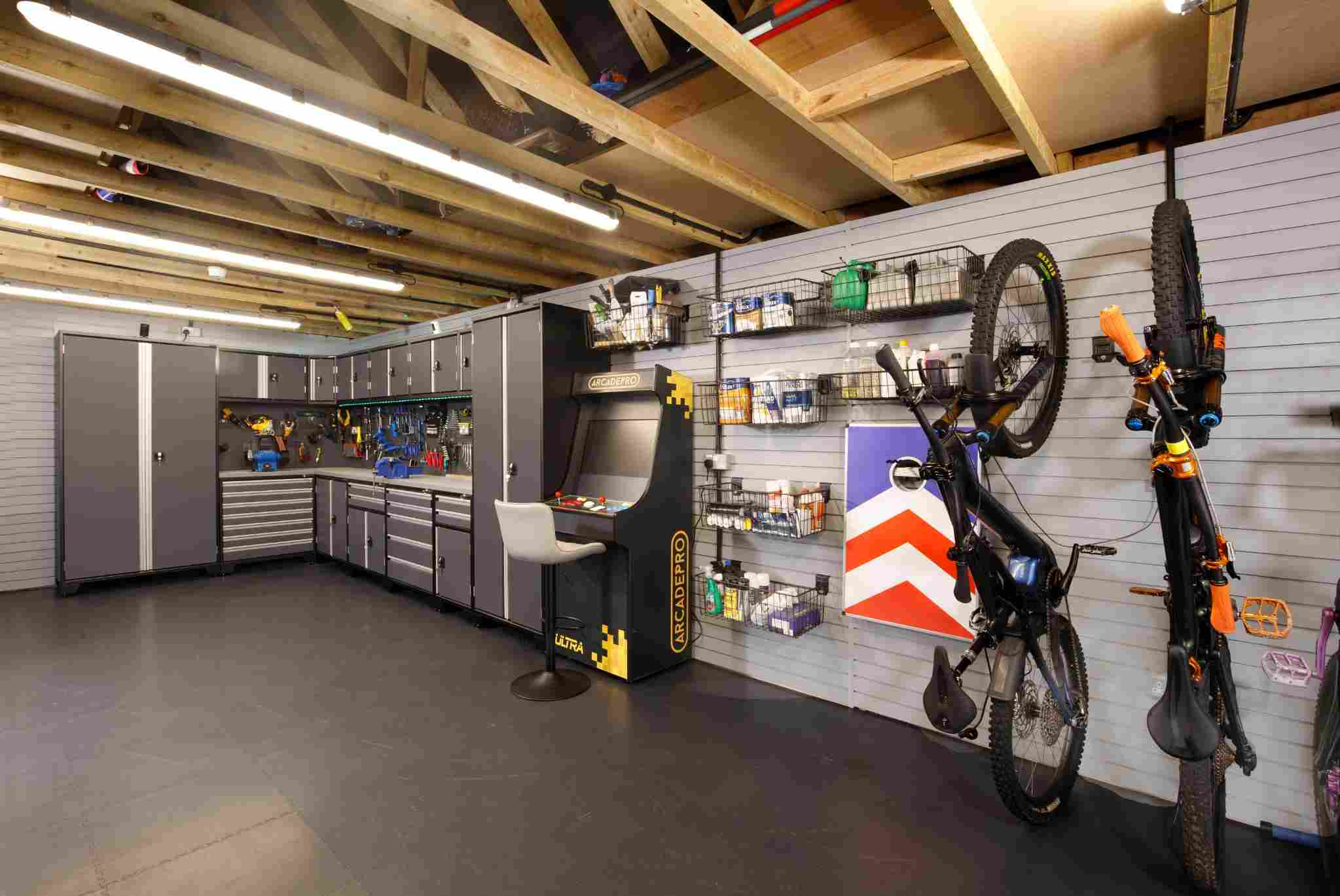
Before anything else, decide what the room is for. A gym, an office, a workshop, a playroom, or a flexible multi-use space.
That decision drives everything, the flooring, the amount of power and light, the storage, and whether you keep any parking or tools.
Our garage organisation guide is a useful starting point for planning how the space will work.
Do You Need Planning Permission?
Most internal garage conversions fall under permitted development, so they do not need full planning permission. But this is not guaranteed.
If you are changing the structure, the external walls, or the use in a way that affects the property, check with your local council first.
Building regulations usually apply even when planning permission does not, particularly for insulation, electrics, and fire safety. Always confirm before you start.
Step One: Sort the Floor
The floor is the foundation of the room, so it comes first. A bare concrete slab is cold, dusty, and unwelcoming.
Interlocking floor tiles transform it quickly, adding warmth underfoot, grip, and a finished look, all without a messy screed or glue.
Choose the tile to suit the room. Our floor tile range guide covers the options, from hard-wearing to cushioned.
Step Two: Walls, Insulation and Light
A usable room needs to be warm and bright. Insulating the walls and door makes the space comfortable year-round, which is essential for an office or gym.
Then sort the lighting, because a dim converted garage never feels finished. Spread bright, cool-white fittings across the ceiling.
Our guide on garage lighting covers how much light you need and where to put it.
Step Three: Storage That Keeps It Usable
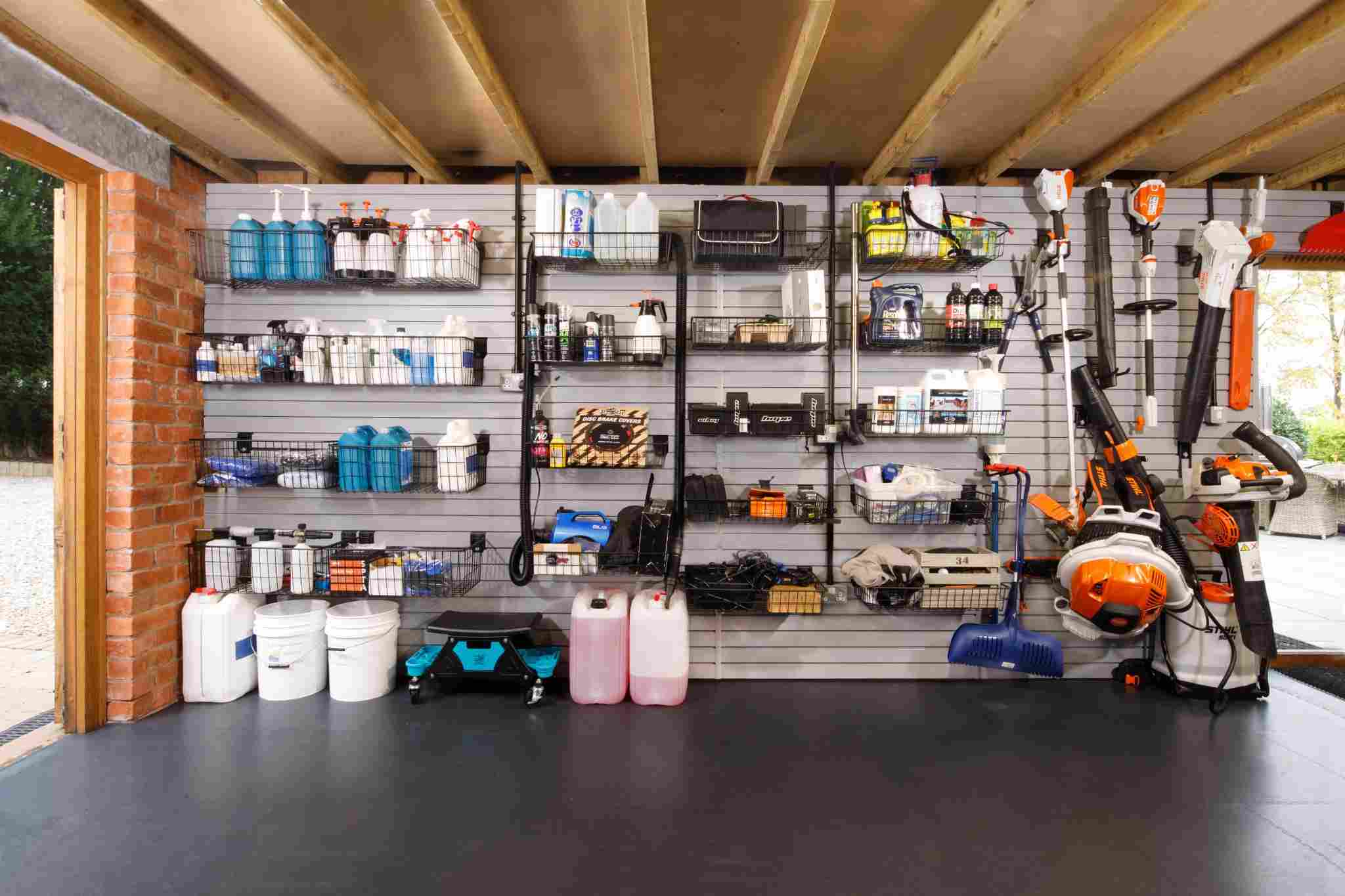
The reason many conversions drift back to clutter is a lack of storage. Whatever the room's purpose, the leftover bits and pieces still need a home.
Wall storage keeps the floor clear, while cabinets hide away anything you do not want on show. A slatwall system is flexible enough to adapt as the room's use changes.
See our guide comparing racking, shelving and cabinets to choose the right storage for the space.
Popular Garage Conversion Ideas
The most popular UK conversions are practical, everyday spaces.
- Home office — warm, quiet, and separate from the house
- Home gym — cushioned flooring and room to train
- Workshop or hobby room — bench, tools, and good light
- Flexible multi-use room — storage plus a clear central space
For a training space, our garage gym guide covers the detail.
What Does a Garage Conversion Cost?
Cost depends on how far you go. A light conversion, tiled floor, lighting, and storage to make the space usable, is surprisingly affordable and something you can do yourself.
A full conversion into a heated, insulated, plastered habitable room costs more, especially if you bring in trades for electrics and building work.
The good news is you can start light and upgrade over time. Even the basic version transforms how the space looks and works.
Common Conversion Mistakes
The most common mistake is skipping the floor and working straight onto bare, cold concrete. It leaves the room feeling like a garage no matter what else you do.
Another is under-lighting the space, or forgetting storage, so it drifts back to clutter within months.
And starting without checking building regulations can cause problems later. Plan the order, confirm the rules, and the conversion goes smoothly.
Planning It in Stages
You do not have to do everything at once. Floor and light first, then insulation and storage, then the finishing touches as budget allows.
Because tiled flooring and modular storage go in without major building work, you can improve the room over time.
If you would rather have it designed and fitted for you, our garage design and fit-out service handles the whole project.
FAQ: Garage Conversion
- Do I need planning permission to convert a garage? Most internal conversions fall under permitted development and do not, but building regulations usually still apply. Always check with your local council before starting.
- What is the first step in a garage conversion? Decide the room's purpose, then sort the floor. The floor sets the comfort and look of the whole room and everything else builds on it.
- How do I stop a converted garage feeling cold? Insulate the walls and door, lay interlocking tiles over the cold slab, and add proper heating and lighting for a comfortable, year-round room.
- Does a garage conversion add value? A well done conversion into usable space, such as an office or gym, can add value and appeal, since it gains living space without extending the footprint.
Conclusion
A garage conversion is one of the best-value ways to gain space in a UK home. Decide the purpose, sort the floor and light, insulate for comfort, and add storage that keeps it usable.
Do it in the right order and the most neglected room becomes the most useful.
Browse our flooring and storage range, or explore our garage design service to start your conversion.
Related GaragePride Guides
Share Story


