
How to Store Power Tools in a Garage: Keep Them Safe & Dry
Power tools are among the most expensive things in most garages, yet they often end up dumped on a bench or crammed in a drawer. That means damaged tools, missing accessories, and ten minutes lost finding the right drill bit. Storing them properly protects your investment and speeds up every job. Here is how to store power tools in a garage the right way.
Key Takeaways
- Keep power tools off the floor, dry, and out of the dust.
- Cabinets protect valuable tools and lock them away from children.
- Store each tool with its charger, batteries, and accessories together.
- Keep the tools you use most within easy reach of the bench.
Why Power Tools Deserve Proper Storage
A cordless drill, circular saw, or sander is a serious investment. Left loose, they get knocked, dusty, and damaged, and they walk off or go missing.
Good storage keeps them protected, charged, and easy to find, which makes every job quicker and safer.
It also keeps sharp, powerful tools out of reach of children, which matters in any family garage.
Cabinets: The Best Home for Power Tools
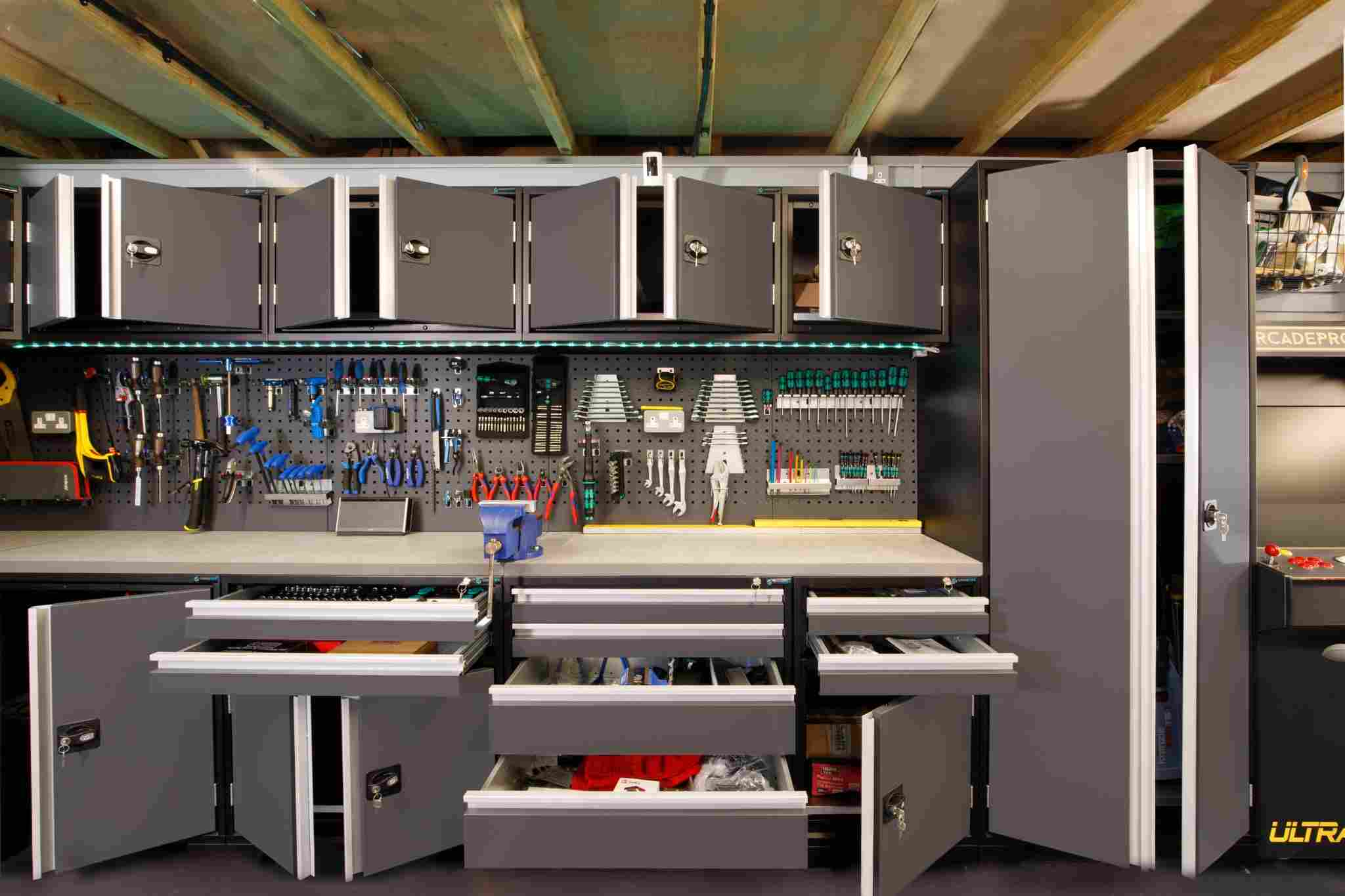
For valuable power tools, a closed cabinet is hard to beat. It keeps out the dust that clogs motors and vents, and a lock keeps the tools secure.
Our garage storage cabinets come in lockable steel, ideal for keeping expensive kit safe, clean, and out of sight.
Adjustable shelves let you fit everything from a compact driver to a large circular saw on one unit.
Roller Cabinets for the Workbench
If you work at a bench, a roller tool cabinet keeps your power tools right where you use them. Deep drawers swallow drills, sanders, and their cases.
Because it is on wheels, you can move the whole lot to the job and back again. Our tool chests and roller cabinets are built for exactly this.
Drawer dividers keep bits, blades, and chargers from becoming a jumble.
Keep Each Tool With Its Kit
A power tool is only useful with its battery, charger, and accessories. Store them together and you never hunt for a flat battery or a missing bit.
Keep each tool in its case where you can, or group it in one drawer or bin with everything it needs.
Set up a charging spot near a socket so batteries are always topped up and ready to grab.
Store by How Often You Use Them
The drill you reach for daily should be at the front, at bench height. The tools you use a few times a year can go higher or deeper.
This simple habit saves you moving three things to reach the one you need every time.
Our guide comparing racking, shelving and cabinets helps you match storage to how often you use things.
Wall Storage for Smaller Tools
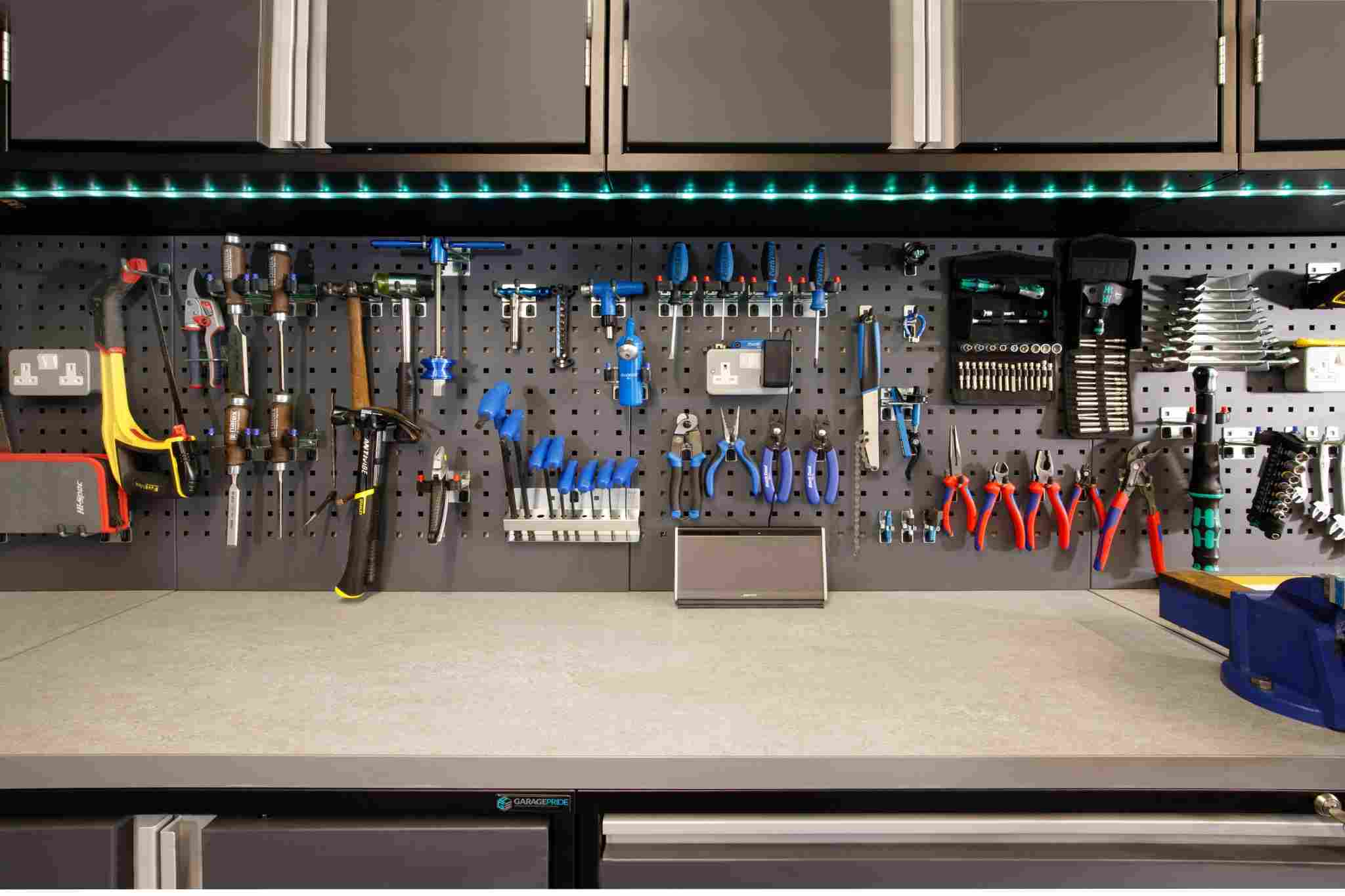
Not every tool needs a drawer. A slatwall panel keeps grinders, drivers, and hand-held tools visible and off the bench.
Hooks and holders keep everything in its place, so you can see at a glance if something is missing. For hand tools specifically, our garage tool wall storage guide covers hooks and boards in detail.
Wall storage above the bench puts your most-used tools right where you work.
Sort the Small Accessories
Drill bits, blades, sanding pads, and driver tips are easy to lose and slow to find. Small labelled cases or drawer dividers keep each type together.
Keep the consumables near the tool that uses them, so a blade change does not turn into a hunt across the garage.
A little tray or organiser inside a drawer costs very little and saves a lot of wasted time.
Look After the Batteries
Cordless tool batteries are expensive, so treat them well. Store them off a cold concrete floor, as extreme cold shortens their life.
Keep them partly charged rather than flat if they will sit for a while, and top them up before a big job.
A tidy charging shelf near a socket keeps every battery ready and stops a pile of chargers cluttering the bench.
Protect Tools From Damp
Damp is the hidden killer of power tools, causing rust on metal parts and problems in motors.
Keep tools off the cold concrete floor, which draws moisture, and store them in a closed cabinet where you can.
A tiled floor and good ventilation help keep the whole garage drier, which protects everything in it.
Corded Tools and Extension Leads
Corded tools and leads turn into a tangle if you let them. Wrap each lead neatly and secure it with a strap or tie before storing the tool.
Hang extension leads and reels on a wall hook rather than coiling them on the floor, where they become a trip hazard and get damaged.
Keeping leads tidy also lets you spot any nicks or damage before you plug in, which matters for safety.
FAQ: Storing Power Tools in a Garage
- What is the best way to store power tools in a garage? In a lockable cabinet or roller tool chest that keeps them dust-free, secure, and off the floor, with each tool stored alongside its charger, batteries, and accessories.
- How do I stop power tools rusting in the garage? Keep them off the cold concrete floor, store them in a closed cabinet, and keep the garage dry with good ventilation and a tiled floor.
- Should power tools be locked away? If children use the garage, yes. A lockable cabinet keeps sharp, powerful tools out of reach and also deters theft of valuable kit.
- How should I organise power tools? Store each tool with its battery, charger, and accessories, keep the most-used tools at bench height, and use wall storage for smaller hand-held tools.
Conclusion
Power tools are too valuable to leave loose. Keep them dry, dust-free, and secure in cabinets or a roller chest, store each with its own kit, and put the ones you use most within reach.
Do that and your tools last longer, stay charged, and are always where you expect them.
Browse our garage storage cabinets to keep your power tools safe and organised.
Related GaragePride Guides
Share Story


