
Racking vs Shelving vs Cabinets: Which Garage Storage System?
Racking, shelving, cabinets. They all store things in a garage, so does it really matter which you choose? It does. Each one is best at a different job, and the tidiest, most usable garages use a mix rather than picking just one. This guide breaks down what each does best, so you spend your money where it counts. Here is how to choose.
Key Takeaways
- Racking is for heavy, bulky items in volume.
- Open shelving is for everyday items you want visible and to hand.
- Cabinets are for anything you want hidden, locked, or dust-free.
- The best garages combine all three by zone.
The Three Main Storage Types
Nearly all garage storage falls into three families. Racking, open shelving, and closed cabinets.
They overlap a little, but each has a clear strength. Understanding those strengths is how you avoid overspending on the wrong thing.
Most people do not need to pick one. They need the right combination for how they actually use the space.
Racking: For Heavy and Bulky
Racking is the heavy lifter. Built from thick steel, it carries serious weight across large shelves without sagging.
It is the right choice for bulk storage, car parts, bags of salt, boxes of tiles, and anything heavy you buy in quantity.
If your storage problem is weight and volume, garage racking is where to start.
Shelving: For Everyday Access
Open shelving is about visibility and quick access. You can see everything at a glance and grab it without opening a door.
It suits the things you reach for often, car care products, paint, frequently used tools, and labelled storage boxes.
For heavier everyday loads, heavy-duty shelving gives you that easy access without the sag.
Cabinets: For Hidden and Secure
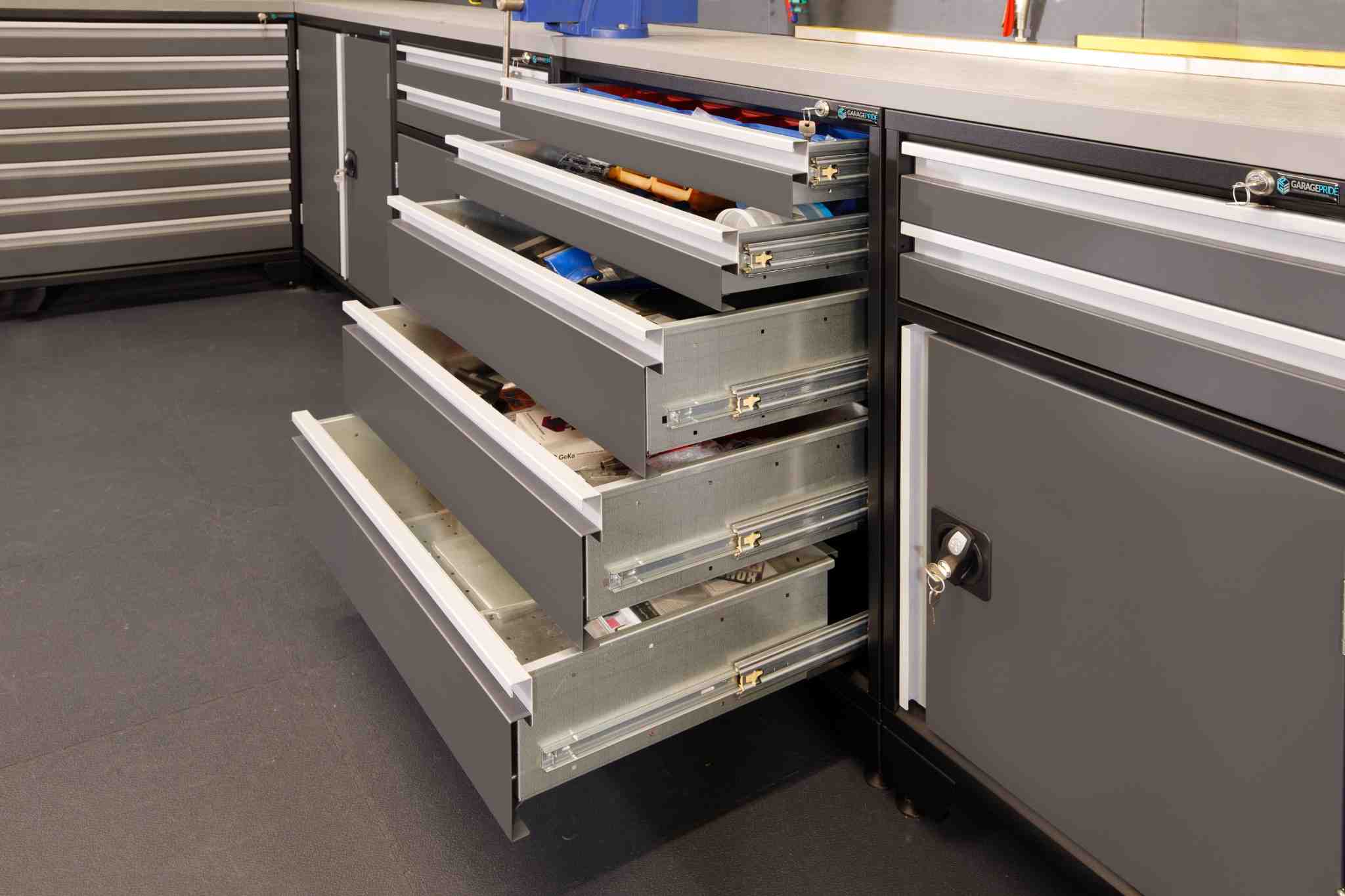
Cabinets are the choice when you want things out of sight, locked away, or protected from dust.
They are ideal for chemicals, sharp tools, valuable kit, and anything you would rather children could not reach. A closed door also makes the whole garage look tidier instantly.
Our garage storage cabinets come in lockable steel options for exactly this.
A Quick Comparison
Here is the short version:
- Racking — heavy, bulky, buy-in-bulk items. Maximum weight and volume.
- Shelving — everyday items you want visible and quick to grab.
- Cabinets — anything hidden, locked, dust-free, or hazardous.
Most garages need some of each, in different zones.
How to Combine Them by Zone
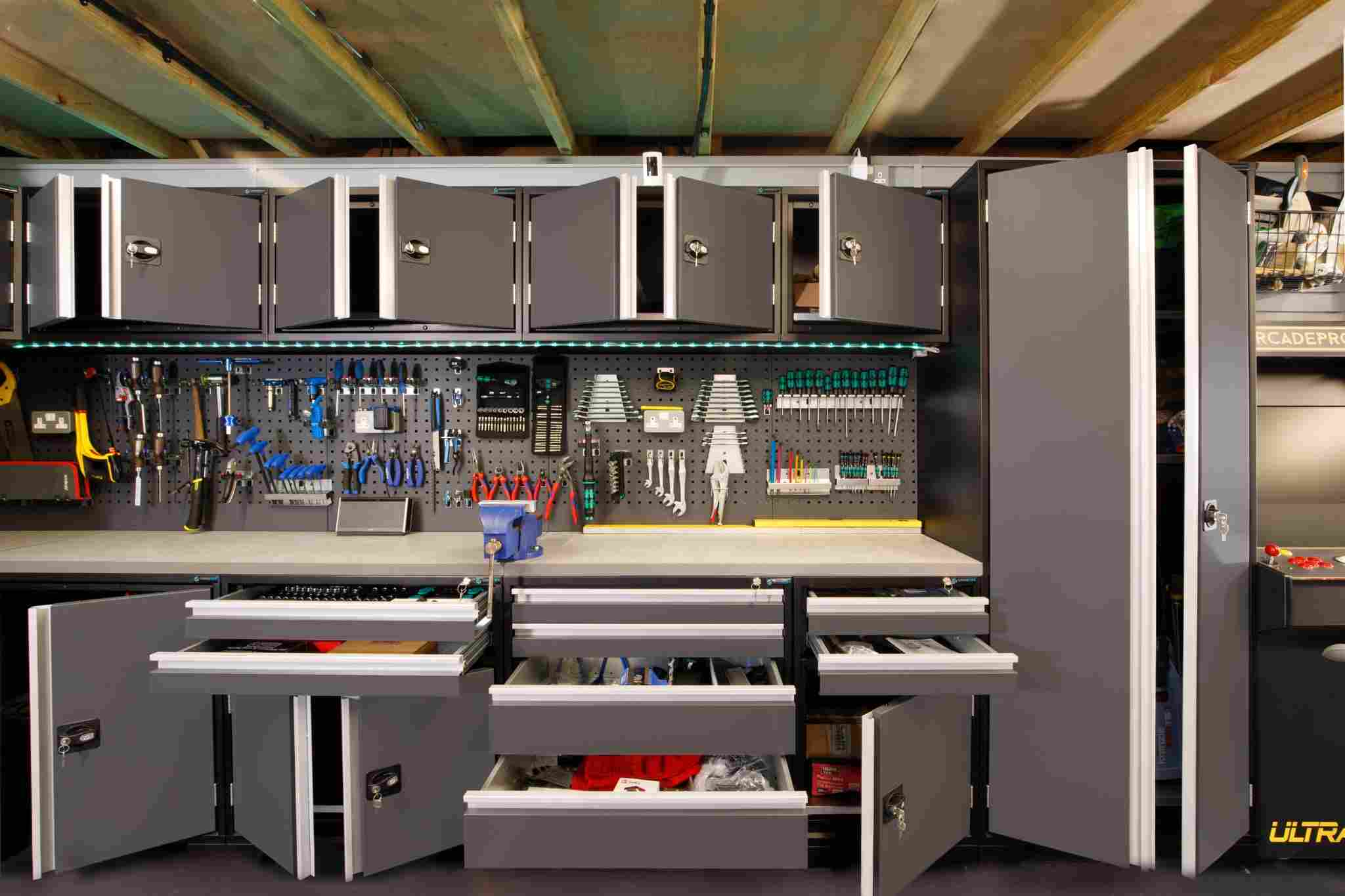
The trick is to zone the garage and match the storage to each zone. Racking along the back wall for bulk. Shelving above the bench for daily items. Cabinets for chemicals and valuables.
Think about frequency of use. The things you touch daily go in the most accessible spot, the rest can go higher or behind doors.
Our garage organisation guide walks through zoning the whole space.
Matching Storage to What You Store
The quickest way to decide is to look at what you actually own. Heavy, bulky, and bought in bulk points to racking. Everyday items you grab often point to open shelving.
Anything hazardous, valuable, or unsightly points to a cabinet. Most garages have all three kinds of stuff, which is exactly why a mix works best.
Walk round the garage, group your things into those three buckets, and the right split becomes obvious.
Comparing the Cost
Budget often decides the order you buy in, so it helps to know how the three compare. Racking gives the most storage capacity for the money, which is why it is the usual starting point.
Open shelving sits in the middle, cheap for light-duty and rising with the load rating. Cabinets cost the most because you are paying for doors, locks, and a finished look.
None of it has to be bought at once. Because the systems are modular, you can start with one and add the others over time.
Common Storage Mistakes to Avoid
The biggest mistake is buying one type for everything. Cramming heavy bulk onto light shelves, or hiding daily tools behind cabinet doors, just creates new problems.
Another is ignoring weight ratings and overloading a shelf until it sags. And buying before measuring leaves you with units that do not fit the space or block the car.
Plan the zones first, then match the right storage to each. That one step avoids most of the usual regrets.
Which Should You Buy First?
Start with whichever solves your biggest problem. If heavy boxes are on the floor, buy racking. If tools are scattered, start with shelving or a cabinet.
Because these systems are modular, you can add to them over time without anything going to waste.
If you would rather have the whole thing planned, our garage design service can specify the right mix for your space.
Buying Tips Before You Commit
Measure the space first, including height, so whatever you buy fits and does not block the car or door. Then check load ratings against what you plan to store.
Stick to systems that can expand, so you can add matching units later rather than starting over. And pick finishes that handle damp, powder-coated or galvanised steel.
Buy for the garage you want in a year, not just the pile of stuff in front of you today.
FAQ: Racking vs Shelving vs Cabinets
- What is the difference between racking and shelving? Racking is heavy-duty and built for weight and volume. Open shelving is lighter and built for visible, everyday access. Racking holds far more per shelf.
- When should I use cabinets instead of shelves? When you want items hidden, locked, or protected from dust, such as chemicals, sharp tools, or valuables. Cabinets also make a garage look tidier.
- Can I mix all three in one garage? Yes, and most well organised garages do. Zone the space and match racking, shelving, and cabinets to what each area stores.
- Which is best value? Racking gives the most storage capacity per pound. Cabinets cost more but add security and a cleaner look. The best value is the right mix for your needs.
Conclusion
Racking, shelving, and cabinets are not rivals, they are a team. Racking takes the heavy bulk, shelving keeps everyday items to hand, and cabinets hide what needs hiding.
Zone your garage, match the storage to each zone, and build it up over time.
Browse our full garage storage range to build the right combination for your space.
Related GaragePride Guides
Share Story


